SEE THE EVENTS PAGE FOR 'DATES FOR YOUR DIARY'

LETTER FROM THE CHAIR
Greetings and welcome to our August Newsletter.
Well, the hot weather continues with no end, so I hope you are enjoying the time in the garden, though we need to water most evenings. Also, this time of the year we tend to travel near and far to visit friends and relations.
I have just seen The Odyssey, all 3 hours of it, relating to Odysseus, away from home for ten years, but then taking another ten years to travel 400 miles back! However, he did experience a few set-backs with vengeful gods and monsters. I trust you will have safer journeys home before schools start in September!
See you soon,
Richard Lewis
Chair
Richard Lewis Chair Furness u3a
A New Vision for the Third Age Trust
The Third Age Trust has published a new strategy that explains the vision that will guide its work for the next 3 years.
The vision, that summarises what the Trust is trying to achieve, is a future where everyone has the opportunity to have a positive and fulfilling later life through lifelong learning.
The Trust will work to achieve this vision by promoting, supporting and strengthening the u3a movement, comprising hundreds of u3as like ours.
For further details, please visit https://www.u3a.org.uk/about/about-the-trust/strategy-governance
GROUP NEWS
For help and support with starting or running groups, please contact
Duncan Platts Groups Liaison
ENVIRONMENT MATTERS
“It came from Mother Earth, return it to Mother Earth…”
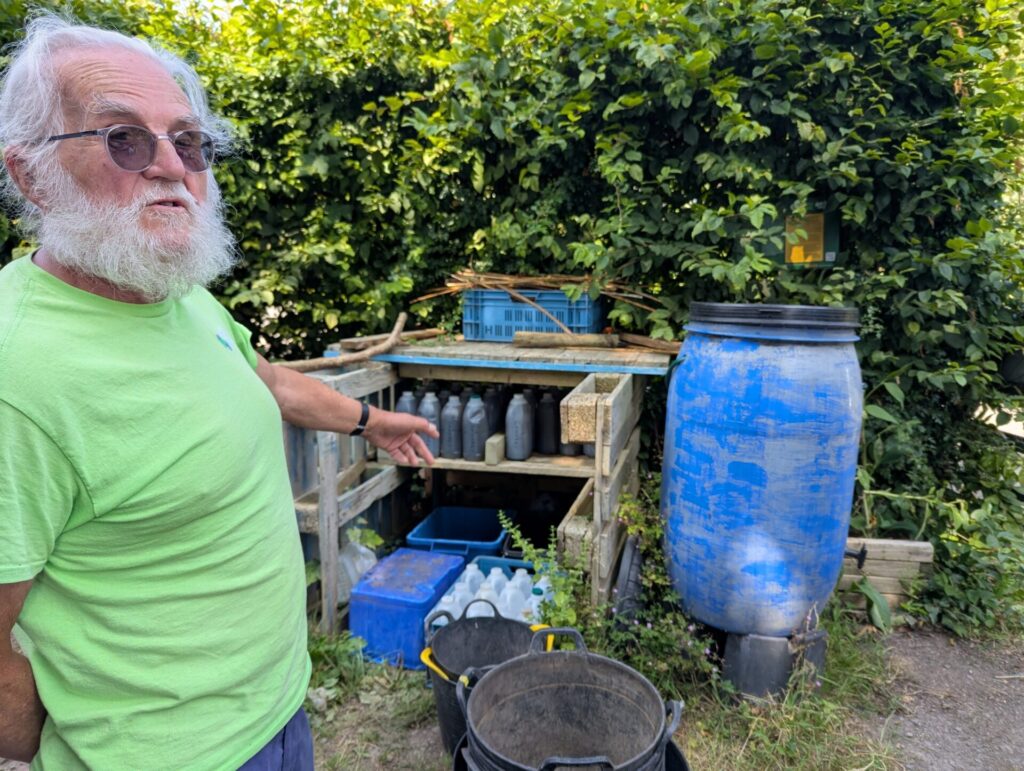
Five members of the Environment Matters group were guests of Steve Povey, Head of Composting at Ford Park Plant Nursery and Walled Garden, for this month's outing.
At his composting area, Steve took us through the sequence of his open bays, from raw composting materials through to almost-ready-to-use compost. He also showed us the Joanna Bin, provided by the council, along with other types of bins used for hot composting. He demonstrated the tools he uses to stir and aerate the compost, and his renowned comfrey compost was also on display.
We then took a walk around the walled garden, admiring the bountiful produce that has benefited from Steve's composting. The Jerusalem artichokes were particularly impressive!
The tour coincided with Steve's birthday, so we finished with celebratory tea and birthday cake in the Garden Room.
Thank you, Steve!
Lucy Chilton
VISITING GARDENS
Crumble Cottages, Cartmel
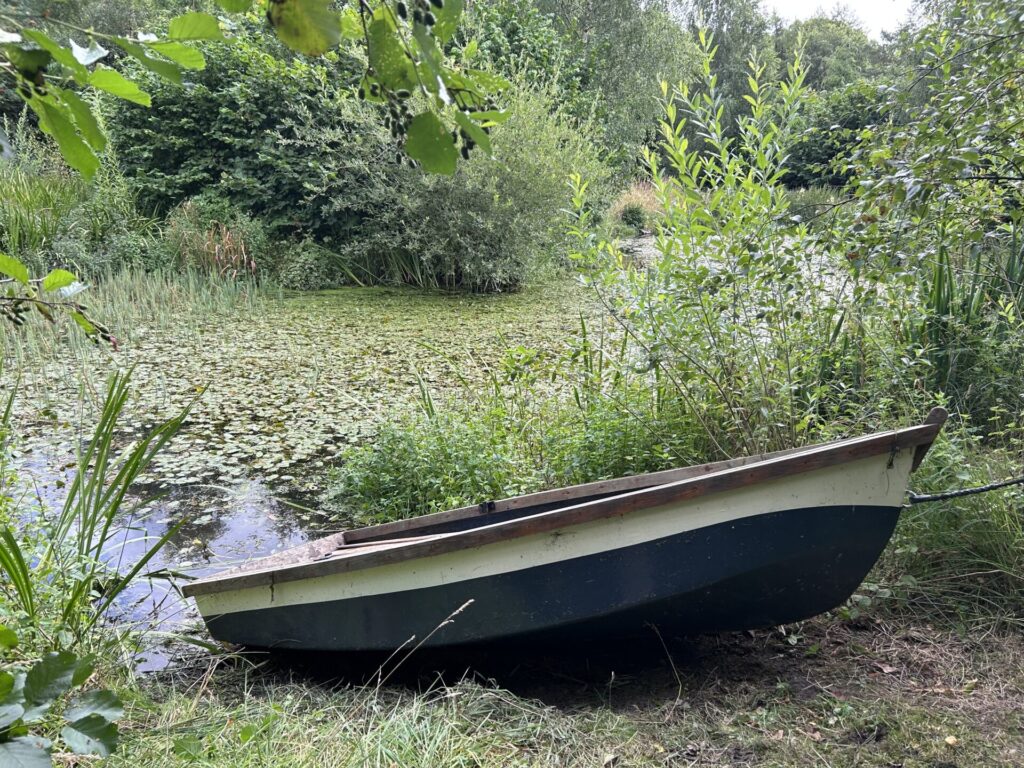
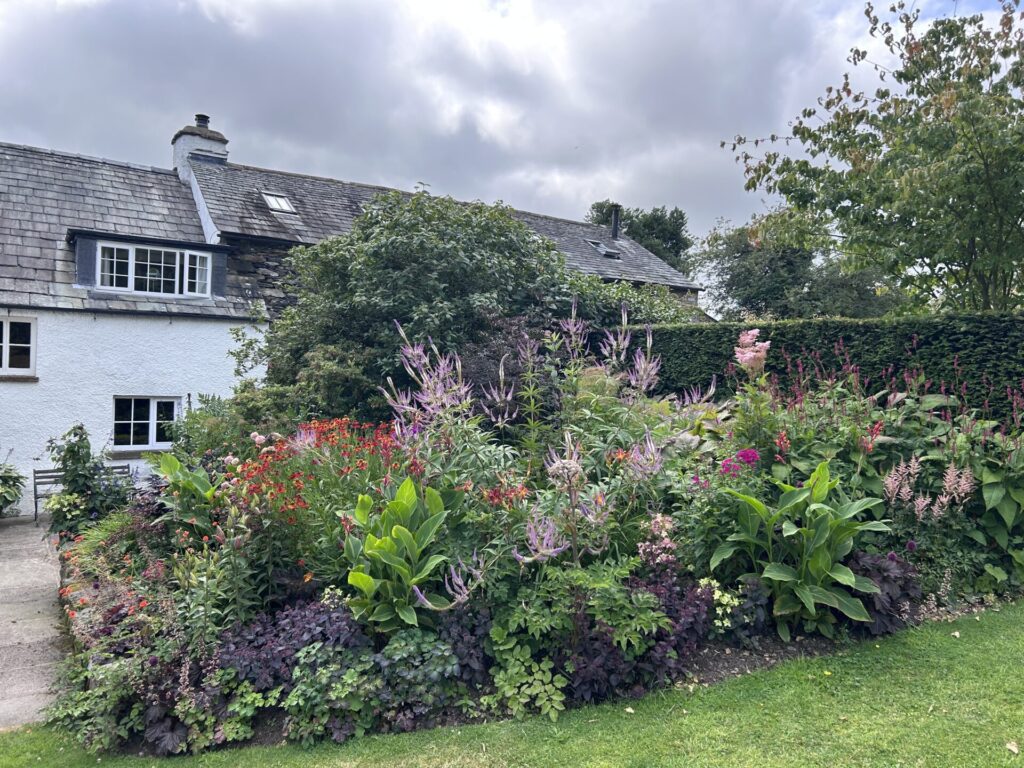
In June over 20 of us visited Crumble Cottages, Cartmel. Finding it was challenging, not helped by road closures, but on arrival a lovely garden waited for us to explore. There was a picturesque old cottage, updated by the owners, surrounded by flower garden, meadows, a very beautiful and productive vegetable garden and some ancient dry stone walls. These led on to an area which had been re-wilded over the last 11 years, with trees, ponds and areas of long grass. Our hosts were very welcoming and we enjoyed homemade biscuits and flapjack.
Thanks to Pat Timewell for organising this trip.

Our next garden visit will be to Levens Hall on 18th August. Levens Hall is a historic house which is particularly noted for its gardens with their ancient yew topiary carved into amazing shapes. We will meet at Victoria Road at 9.45 for car sharing and to collect payment for the garden. The cost is £4 payable to drivers and £10.05 for the garden, which is a discount on their normal pricing. Refreshments are not included but there is a café on site. Dogs are allowed in the deer park and courtyard next to the café, but not in the garden. Liz Harrison is organising this visit.
To book your place please contact Jeni Sarson by 10th August, stating whether you are a driver or will need a lift.
Jeni Sarson Visiting Gardens
INDUSTRIAL HISTORY GROUP
Industrial History visit to Little Langdale on the 23rd of July 2026
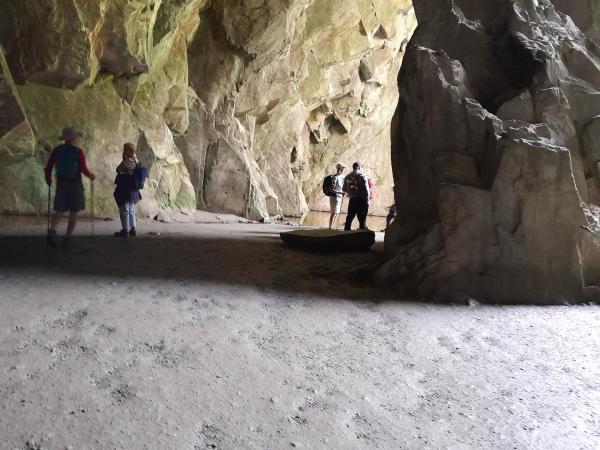
We parked in the National Trust car park at Tilberthwaite and walked up the road past High Tilberthwaite. Following the track through the woods, we reached the ford and bridge on the River Brathay. A short walk alongside the river and then we turned left, up the path, to the entrance to Cathedral Cavern (Quarry).
This impressive, man-made slate mining site dates back to the sixteenth century. At that time the green slate was carved out by hand. Later, during the Victorian build boom, drills and explosives were used to quarry the slate. The site gets the name “Cathedral” from the massive central pillar of slate and the 40ft high arched ceiling of the main chamber, lit by a natural rock window.
The site was purchased by Beatrix Potter in 1929 to prevent over development of Langdale. Later she gave it to the National Trust to preserve it.
At this point the group felt fit enough to carry on to take a look at the remains of the late nineteenth century military rifle range on the west side of Blea Moss, below the footpath from Blea Tarn to Wrynose Pass. On the way, the group passed Ting Mount at Fell Foot Farm, Little Langdale. This is a large, man-made, flat topped rectangular moot mound. It derives its name from Norse. In an open-air, Norse tribal meeting, freemen would gather to discuss issues which affected all and to debate, affirm, amend or add to existing tribal laws. These meetings were called “a thing”, sometimes expressed as a “ting”.
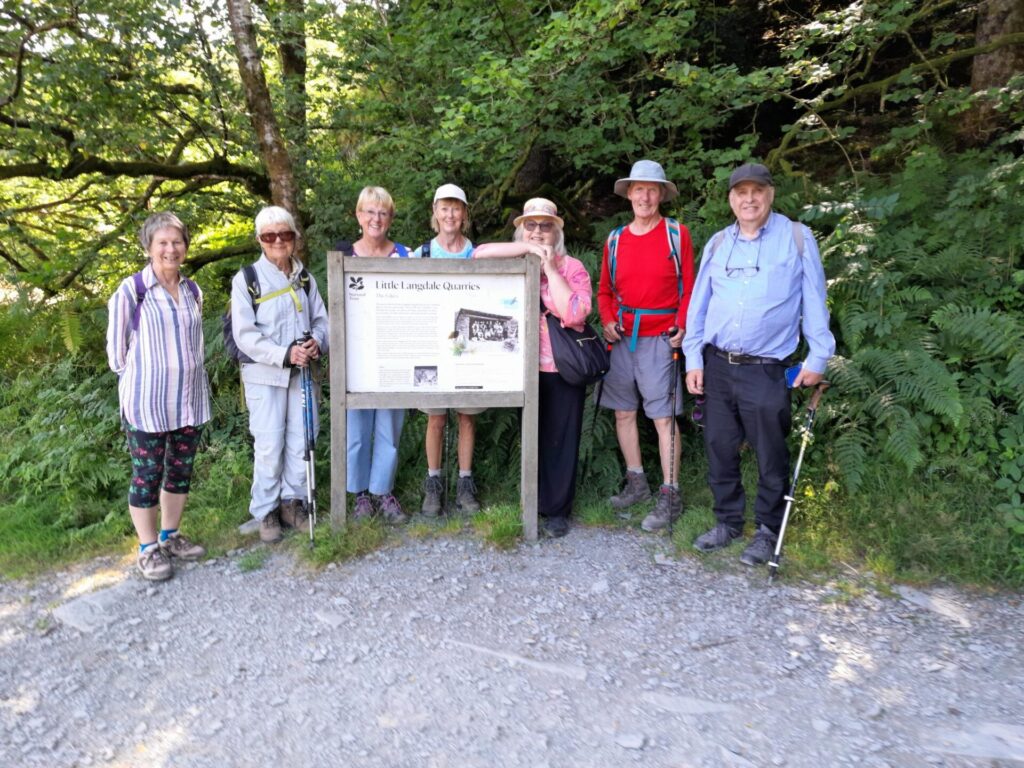
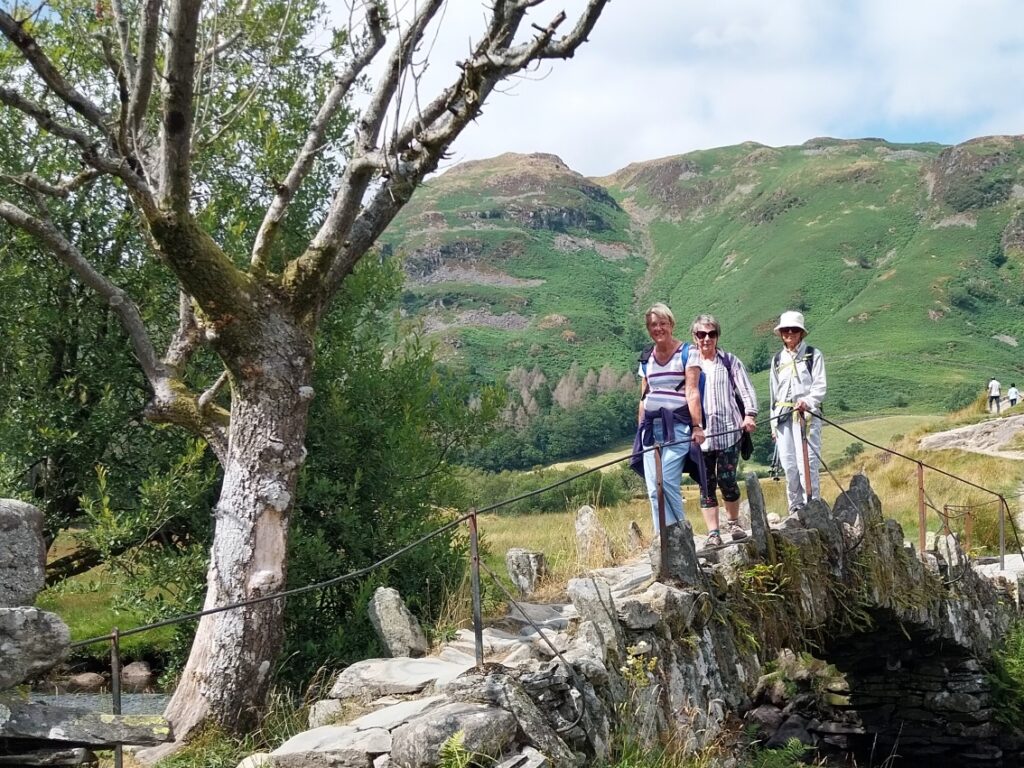
The ascent and the hot day were too much for some of the group so they, very sensibly dropped out, and left the seasoned fell walkers to plod on up to the Victorian, iron targets. These erect targets and the remains of a marker’s hut are a protected historic site. Fear of invasion in the late nineteenth century initiated the start of the Volunteer Defence. Men in Furness and the Lake District were recruited to protect the shores of Britain. The rifle ranges were set up in remote areas for the men to improve their shooting skills. There is evidence of at least 18 such sites in the Lake District National Park.
A very tiring but interesting day. Thank you, Alan for suggesting and leading the visit.
Future visits are:
August 27th – Julia and Neil are leading us around Arneside and Silverdale
September 24th – Threkeld Quarry and Mining Museum
If you would like to join us on any of our visits please let Jo White know.
Barbara and I are already gathering ideas for next years programme, so if you could lead a visit or have an idea please let Jo know.
Jo White Industrial History Group
WORLD HISTORY GROUP
Korean History - The Joseon Dynasty
We started our study of Korean History with a very comprehensive presentation by Julia on the Joseon Dynasty.
From 1392 to 1897, Korea was ruled by the Joseon Dynasty, founded by Yi Seong-gye (King Taejo) after overthrowing the Goryeo Dynasty. Joseon established Neo-Confucianism as the guiding philosophy of government, education, and society, replacing the stronger influence of Buddhism that had existed under Goryeo. The capital was moved to Hanseong (modern Seoul), where royal palaces and government institutions became the centre of political life.
The Joseon government was highly organised and relied on Confucian civil service examinations to select officials. Society was divided into social classes, with the yangban (scholar-officials and aristocrats) holding most political power. Agriculture formed the basis of the economy, while scholarship, literature, art, and technology flourished.
One of Joseon's greatest achievements came during the reign of King Sejong the Great (1418–1450). In 1443, he created Hangul, the Korean alphabet, which made reading and writing far more accessible than the complex Chinese characters previously used. This innovation remains one of Korea's greatest cultural contributions.
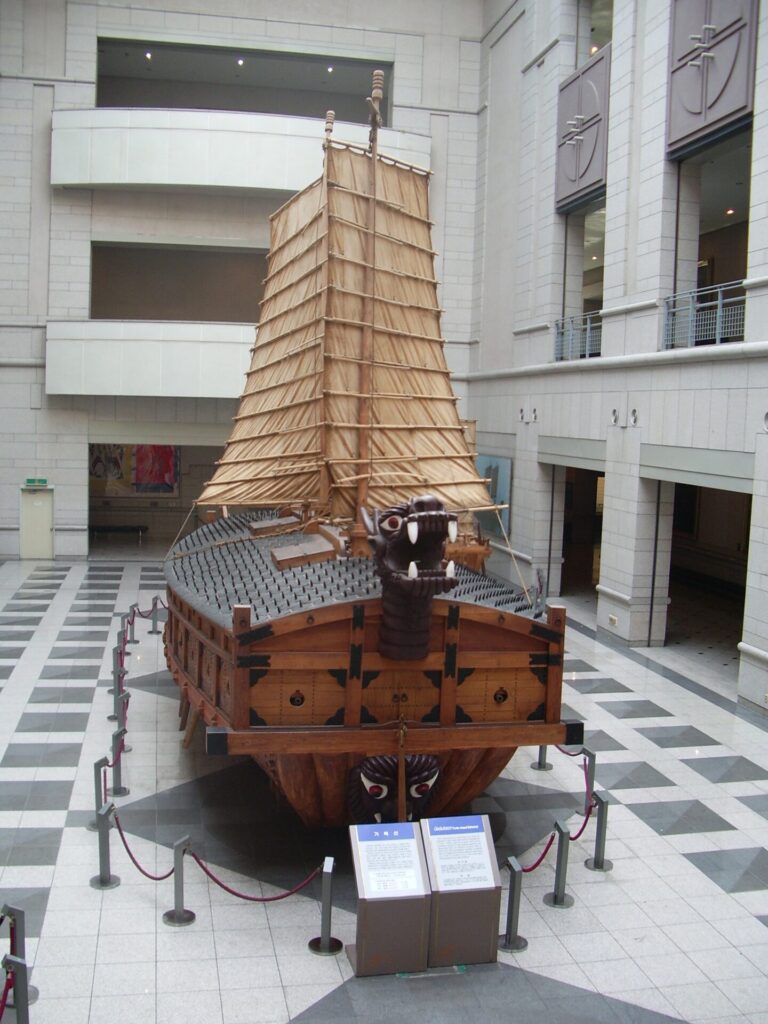
Innovative Korean Turtle Ship
-War Winning Weapon Against Japanese Invasions
Joseon also faced serious military challenges. During the Japanese invasions of 1592–1598, led by Toyotomi Hideyoshi, much of Korea was devastated. However, Korean forces successfully resisted, aided by Admiral Yi Sun-sin, whose innovative turtle ships and naval victories disrupted Japanese supply lines and helped secure victory. In the 17th century, Korea was invaded twice by the Manchus, eventually becoming a tributary state of the Qing Dynasty while maintaining internal self-government.
During the 18th century, Korea experienced periods of stability, economic growth, and cultural development, although political rivalries between government factions often weakened effective leadership. By the 19th century, Korea followed a largely isolationist foreign policy, earning the nickname the "Hermit Kingdom." Despite this, increasing pressure from Japan, China, Russia, and Western powers forced Korea to sign unequal treaties and open its ports to foreign trade.
In 1897, King Gojong proclaimed the Korean Empire, ending the Joseon Dynasty and declaring Korea an independent empire equal to its neighbours. Although this was intended to strengthen Korean sovereignty, growing Japanese influence continued to undermine its independence, culminating in Japan's annexation of Korea in 1910.
This period laid the foundations of modern Korean culture, government, and national identity, with the legacy of the Joseon Dynasty—especially Hangul and Confucian traditions—remaining central to Korean society today.
If you are interested in joining the group please contact Rosie Kyles or via World History Group on the Furness u3a website.
QUESTERS
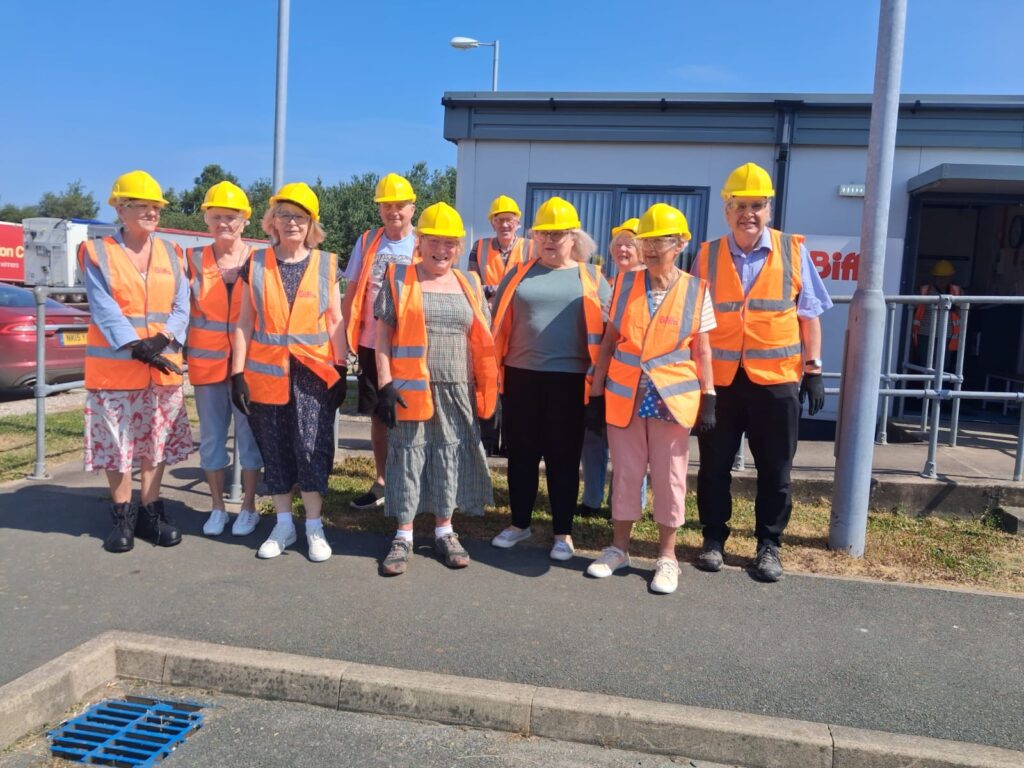
The Questers visit for July was split into two groups. One group went with Catherine Hindle to the Biffa Recycling centre in Barrow again and Catherine reported that everyone enjoyed themselves.
The presentation was even better this year and the highlight of the visit was a fire in the plant! Showcases the dangers they face every day there from batteries thrown out with the rubbish. I am pleased to report that everyone came out safely! Here’s the photo to prove it:
Netty Garforth organised a trip to the Dock museum at the same time and a select few of us thoroughly enjoyed ourselves, so much so that one member stayed on into the afternoon! How lucky we are to have such a little gem of a museum right on our doorstep.
Tim and I would like to thank Catherine and Netty for organising these trips for us, another enjoyable Quester's trip.
Next month on August the 20th Sabina Garrett has arranged a visit to Gleaston Water Mill for us. A water mill has been on this site for 700 years. Our tour will be taken through the life of the mill, how it has supported local farmers and in turn how it has been supported itself. There are so many stories to be heard and artefacts to be seen, it is truly a hidden gem! We already have 19 Questers on the list for this visit and should you also like to come along, please get in touch with either Sabina Garnett or Tim Evans. The entrance cost is £5.00 and £2.00 for the driver should you need a lift. The tour is booked to start at 10.30 so we will be meeting in the Victoria Road cul de sac at 10.00 to leave at 10.15.
The catering staff at the mill would like to know in advance the lunch requests from each Quester. If Sabina or Tim do not already know your order, once your name is on the list, we'll send the menu to you to make your choice.
Sue and Tim
Please see the Questers Group page for details, or contact Tim Evans
DIGITAL PHOTOGRAPHY GROUP

We’re keen to add a few new members to our enthusiastic and friendly photography group. We meet monthly and encourage our group members to take and show their photos. We learn about improving our photography via tutorials and/or by examining the work of excellent photographers. We encourage all levels of expertise and experience. Similarly it doesn’t matter if you use a mobile phone or the latest Hasselblad medium format – if you’re interested in photography, this group is for you.
Our monthly meetings consist of:
1. A slideshow/talk on a topic of interest, eg a tutorial, or the work of a master photographer.
2. Tea break. This is a great time to discuss any equipment or other technical issues you have, eg how to progress from using your camera on auto only.
3. A review/discussion of photos submitted by group members for our monthly assignment, via a free online private platform called Flickr. This is a chance to get positive feedback on your own pictures, eg on composition, colour, shape, and to learn from what others have done.
There are also occasional outdoor meetings to take photos, according to opportunity (eg Dickensian Festival) and weather. These may be set up and cancelled at short notice, so we have an optional WhatsApp group to be able to communicate quickly.
We meet in the Bedford Room at the Methodist Halls in Hartley Street, Ulverston. This is on the 3rd Thursday of every month, from 2 to 4pm. The cost per meeting is £3, and includes tea/coffee/biscuits. If you’d like further info, please email Dave Kyles or Carol Collinge.
Or you could just come along to a meeting.
SEQUENCE DANCING
The Sequence Dance group started in January 2026 has been going very well with some members returning to dance after a few years break and some members being totally new to Sequence dancing. So far, we have covered 12 popular Sequence dances from Waltz to Tango to Rumba, and we are super proud of our dancers’ progress.
Going forward, starting in September, we have decided to re-organise and extend our dance session on a Wednesday afternoon splitting it into two distinct parts. The first session being dedicated to beginners, and the second session will be targeted for improvers, returners and the more experienced dancers to extend their repertoire of Sequence Dances.

Hopefully, this format will open up the dancefloor for even more members to discover the joy and health benefits dancing brings.
If you want to join us, please get in touch.
If a Wednesday afternoon is not convenient but you would love to come, please let us know so we can look at different options.
WELFARE AND INCLUSION UPDATE
Recently I’ve attended a few Zoom training sessions and workshops with the u3a. Did you know anyone in the u3a can sign up for these?
Here’s a link to get you started - https://www.u3a.org.uk/what-we-do/learning
Speaking from my own experience, expanding our horizons and challenging ourselves can be very rewarding, especially when you achieve something you didn’t think possible.
The u3a is all about continuing to learn throughout our life, and learning is super beneficial for brain health too. The social aspect of learning in groups is also valuable for our overall wellbeing. Sounds like a no brainer to me.
Dawn Morris Welfare and Inclusion
SOME OTHER SOURCES OF WIDER U3A NEWS
There are several places where you can catch up on U3A news from further afield.
There is a U3A Friends Group who send out a regular newsletter. You can see the July edition here, and if you would like to subscribe there is a link at the bottom of their newsletter.
There is a U3A YouTube channel U3A
The North West Region of the U3A have their own website, and a quarterly newsletter.
This is the August - September 2026 copy. The North West Region's Council Representatives also have a Newsletter read it here.
You can access the national Third Age Matters magazine on line here, including screen read editions.