SEE THE EVENTS PAGE FOR 'DATES FOR YOUR DIARY'

LETTER FROM THE CHAIR
Greetings and welcome to our October Newsletter.
Hello from the Chair.
Inside is our new monthly article featuring the roles of the Team, i.e. the Committee. The first one covers myself as the Chair. I hope that you enjoy reading about the different roles over the next few months. If any of them interest you remember that you can ‘shadow’ them and there is NO time limit.
To complement this, there is the regular Committee Desk at the monthly meetings in the Coro.
Also inside is a report on our 20th Anniversary celebration. It was a great success and enjoyed by all, especially our VIP dignitaries. A great deal of work resulting in a great deal of fun and pleasure. Well done everyone!
But don’t forget the festivities continue with the Silver Saturday on 17th October, and the Coffee Morning on 29th October.
Christmas is coming too! The Christmas Social tickets will be on sale at this month's Monthly Meeting, see details further down the Newsletter.
See you there,
Richard Lewis
Chair
Richard Lewis Chair Furness u3a
20th Anniversary Celebrations
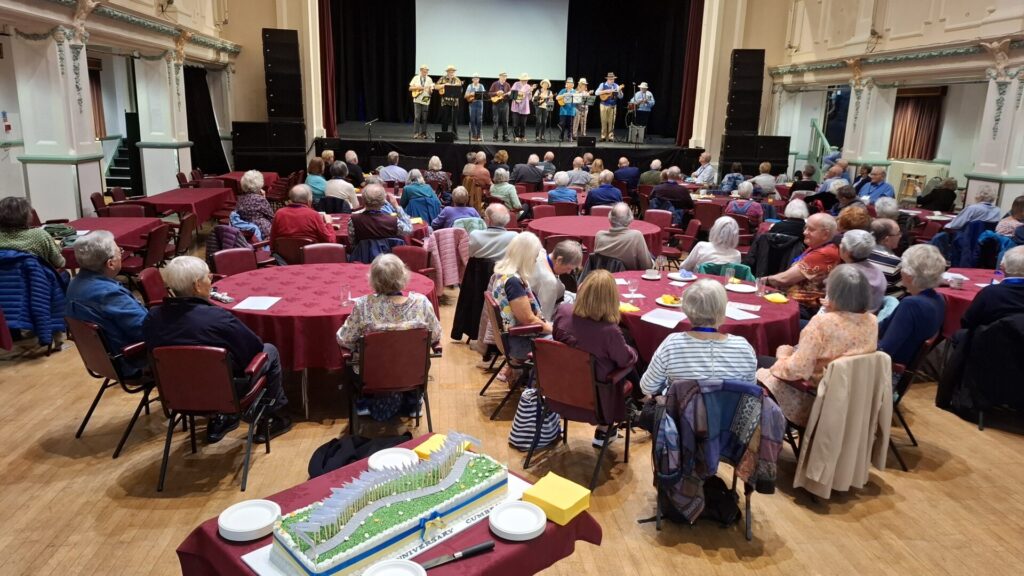
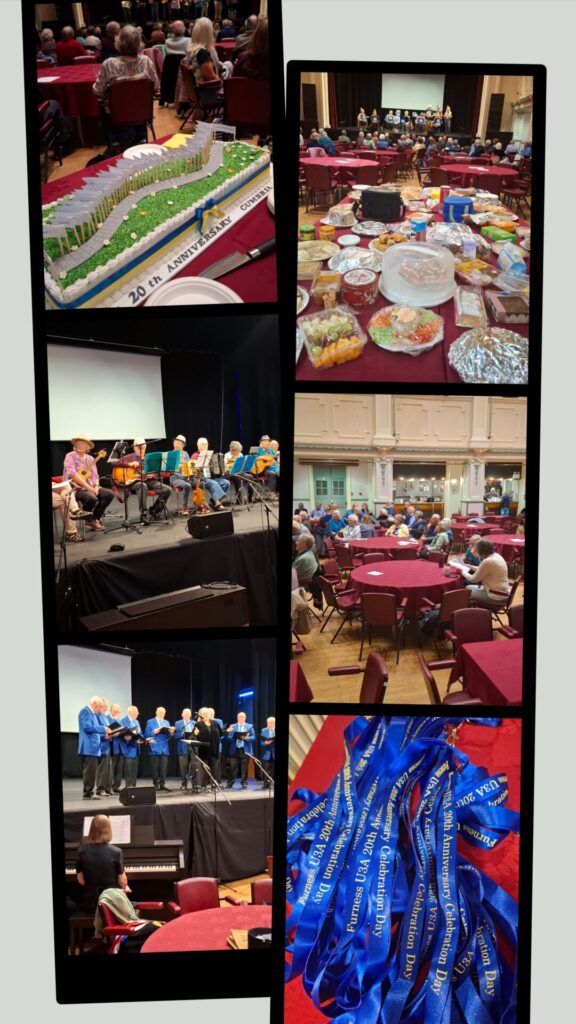
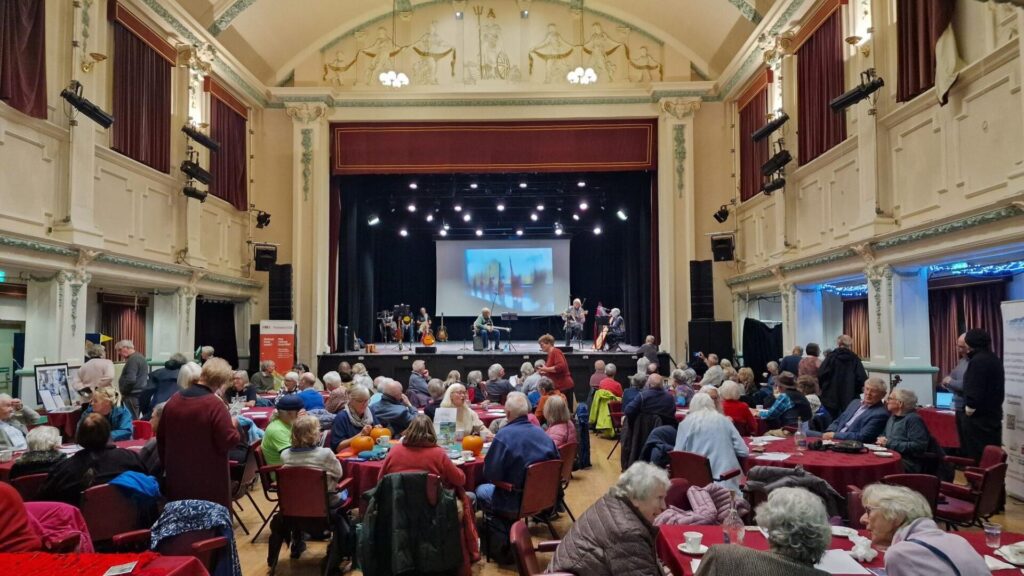
Earlier this week saw our celebration of 20 years of Furness u3a. Here is a small selection of what went on...
The day started very early for our Chair, Richard, with an interview at 7:20am on BBC Radio Cumbria (skip to 1:21:30 if this link doesn't auto-jump for you). This link will only work until 28th October 2026)
From 10am the celebrations started at The Coro, with a wide variety of contributions from our own groups, speeches from local dignitaries, and ending with a set from Barrow Male Voice Choir at 4pm, a full day.
Reflections from one of our founders - The Furness u3a Story
Hello. I am Diane Hill.
Congratulations! Furness u3a has been going for 20 years. Last week the BBC was celebrating 20 years of the programme “Not Going Out”, I am so proud that we are celebrating 20 Years of “Not Staying In” !!!!
The National u3a was founded in 1982 and it has been bringing people together for over 40 years.
From the start, the guiding principles were to promote non-formal learning through self-help interest groups. Based loosely on the French model, our founders envisaged a collaborative approach with peers learning from each other and no qualification needed or received - learning purely for pleasure.
The National u3a is one of the largest membership organisations in the UK with over 435,000 active members in over 1,000 u3as.
Here is our Furness u3a story from my point of view.
It all started with my mother who was in the Wolds u3a which is based in Driffield, East Yorkshire. She had been ill with depression after my father had died and joining her local u3a had brought her out of depression and given her a completely new lease of life with lots of things to do during daytime each week. This had taken a considerable strain off me, and I was able to get on and enjoy my life too.
In 2005 I was living in Dalton and drawing nearer to my 60th birthday. In our area there were quite a few u3as and Grange and District was our nearest. I kept thinking that our area was big enough for a u3a. Being at a loose end I decided to ring u3a headquarters. I was surprised to be told that someone else nearby had also been making enquiries, Brenda Alexander from Nibthwaite. They gave me Brenda’s telephone number, and I gave her a ring straight away.
We arranged to meet and with four other friends, Lawrence Hill (Brenda’s husband), Carole and Tony Sewel and Jean Howard we hired the Supper room at the Coro, put adverts all around the area, got a mention in the local press, told everyone we knew, bought tea, coffee and biscuits and had our inaugural meeting.
This was on Tuesday 24th January 2006 and we had about 80 people and lots of support from the u3a organisation:
- Mike Long, u3a national Development Officer spoke for 30 minutes explaining the aims and objectives of the organisation and answered many questions from the floor.
- Hilary Baker, Chair of Cumbria Region, and Alison Miller from Grange u3a and Iris Shaw the Chair of South Lakes u3a were there to give support and answer questions.
- Members of Ambleside u3a set up a great display of their activities.
When it came to the vote there was a unanimous YES to forming Furness u3a.
“Is there anyone here today who was at our very first meeting?”
“Anyone here who joined in 2006?”
From that meeting we got a Steering Committee.
On Wednesday 8th February we had our first group meeting where we met at Boothes and walked down the canal and back for coffee.
Having looked at all the questionnaires that had been filled in at the first meeting we contacted people and, at our next meeting on Tuesday 7th March, we were able to get many groups ready to go. Our first Newsletter came out at the beginning of April and listed 20 interest groups. We had our first AGM on Tuesday 13th June 2006 where we became a fully-fledged u3a.
The vision of the National u3a is a future where everyone has the opportunity to have a positive and fulfilling later life. I know that we, in Furness u3a, are doing just that.
We now have over 600 members and about 50 interest groups and
here’s to the next 20 years of “NOT STAYING IN”!
String Chickens
The String Chickens ukulele group had a slot on the stage during the 20th Anniversary celebrations. As well as playing and singing from their repertoire Dawn had also written, and read out, this poem describing what the group has meant to her over the years.
We started not with eggs but chicks
Whose names began with J
Judith, Julie, Jacky and Jane
Who knew if they could play!
With a few more besides we started to learn
I doubt if it was harmonic
But the learning together and singing along
Turned out to be a real tonic.
Enough chords mastered, we felt bold
And set out to spread the joy
Our early gigs were to care homes
Their siestas to destroy.
In sheltered housing we were rousing
At Elmhurst we got quite a thirst
At Cavendish Park we met Santa
Having fun has been our mantra.
The 41 Club were hoping for a doze
At Swarthdale we kept them on their toes
With coconut shells and reindeer bells
We all forgot our woes.
At the Dementia cafe someone shed a tear
Moved by our music to remember someone dear
If we dared to think we'd been fantastic
Someone would say, "Do you do anything classic?"
We busked around the Market Cross
To help the people of Ukraine
Sadly the conflict sees no end
Would it help to do it once again?
Cold weather does not deter
The redoubtable String Chickens
We donned our gloves and bonnets
For the festival of Dickens.
Julie has solved her music stand dilemma
It used to get all tangled
After nine years she's got it sussed
But her fingers are all mangled.
We welcome feedback and cups of tea
And donations to our charity
We constantly strive to widen our range
Which gives us moments of hilarity.
Long may the fun continue
May we remain nimble and nifty
Who knows, we might play something
Written after nineteen fifty!
COMMITTEE NEWS
As Richard has already said we are starting a new mini-series this month where our committee tell you a bit about their roles in Furness u3a, so we can all better understand what they do. We start this month with our Chair. Meet Richard....
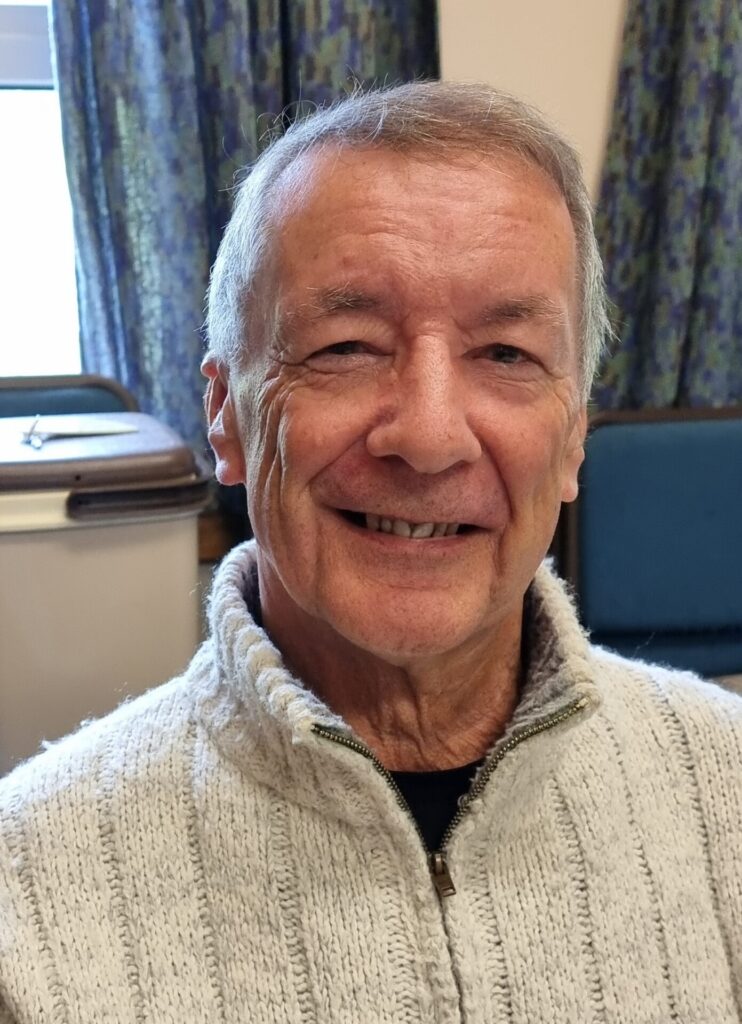
Hello again from the Chair.
In response to enquiries from members as to the different roles on the Committee, such as ...
- what are they?
- what do they do?
- and how can I do it?
... a NEW series starts in this Newsletter, with the role of ‘Chair’
Firstly, don’t be put off with the word ‘Committee’! It is just a word for a team that helps run the u3a.
That team needs a co-ordinator to ensure they all act in harmony and keep order. To lead meetings and events to run smoothly. That is the Chair. Specifically it is one of the four essential roles laid down by the Constitution, the others being Secretary, Treasurer and Vice-Chair.
I had no experience on the Committee before becoming Chair, so it was a bit of a learning curve, but we have an excellent and most able team where we all help each other.
What do I do? Annually, I Chair the AGM, ensuring that all members have all the info needed. Monthly I introduce the Speaker meetings in the Coro, followed by the Committee meetings. In between I receive and send emails from our members and from regional and national u3a’s. This is particularly interesting to see new ideas and feed-back.
Generally, I am here to help in any way I can. It was a very pleasant surprise to find that you don’t need any special skills, just a bit of time and loads of enthusiasm with a sense of humour!
If this interests you, come and ‘shadow’ me. It is immensely rewarding and very flexible.
SILVER SATURDAY - 17th October
Silver Sunday is back, but it is being held on a Saturday this year, so we are calling it Silver Saturday!
This is a "national day where people of all generations can come together by hosting fun and free activities for older people". The Coro has held Silver events for the past two years, and following lots of good feedback, the event is being held again this year.
Furness u3a will again be well represented, with performances from the Uke Troupe and the String Chickens; and contributions from the Sequence Dancing and English Country Dancing Groups. A rolling display of photos from Digital Photography will be on the big screen, and members of the Drawing Group will staff a stall. The Committee will be on hand to talk to guests and sign up new members!
There will be other activities and entertainments as well, together with scrumptious cakes etc.
The event is FREE, from 2.00pm to 4.00pm in the Coro on Saturday 17th October. You don’t need a ticket: just turn up on the day. See you there!!
If you have any queries about the event, please contact our secretary, Neil McLaughlin Cook Secretary, via secretary@furnessu3a.org
COFFEE MORNING - Thursday 29th October
Each month, the Coro in Ulverston hosts a coffee morning in aid of a local charity. In October, the chosen charity is Furness u3a!
Please support us by dropping in from 9.30 to 12 noon. There is no entry charge. Inside the hall, you will be able to buy the usual range of tea, coffee, cakes and so on, AND have a chance to find out more about your u3a. Several u3a Groups have volunteered to take part, so come along, find what your fellow u3a members have been up to, and, perhaps, join one or more new groups!
Like all Coro Coffee Mornings, the event is open to everyone, so invite your friends who are not u3a members to come along as well. If they are inspired to join our u3a, they will find Committee members on hand to explain more about us, and our Membership Secretary will be there to sign up new members.
See you on 29th October!
If you have any queries about the event, please email Neil McLaughlin Cook Secretary, or via secretary@furnessu3a.org.
Christmas Social
Tuesday 8th December 2026
Furness u3a
Christmas Social
Tuesday 8th December 2026
1.00pm to 5.00pm
The Coro, Ulverston
£12 incl. Buffet and Entertainment from the
Furness Music Centre Choir
Tickets on sale at The Coro at the October Monthly meeting
and the November Monthly meeting
9.30am – 10.15am and after the speaker until 11.30am
Please inform of any allergies or intolerances when buying ticket
GROUP NEWS
For help and support with starting or running groups, please contact
Duncan Platts Groups Liaison
LOCAL HISTORY GROUP
We have 2 reports from the Local History in this Newsletter, starting with the August outing.
Visit to Pennington Church
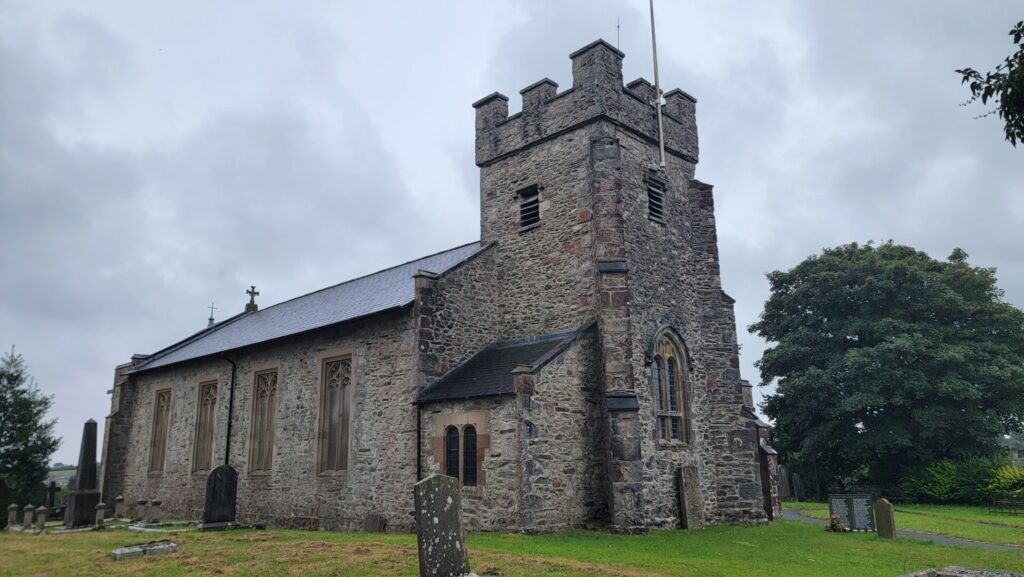
Yvonne Athersmith, the church warden, gave us a brief history of the church rebuilding and renovating for over 1000 years and which today has many original and interesting artefacts. The Bishop of Chester visited in 1821 and decided the church needed to be updated so it was pulled down and a new church was opened in 1826 and was renovated after World War1.
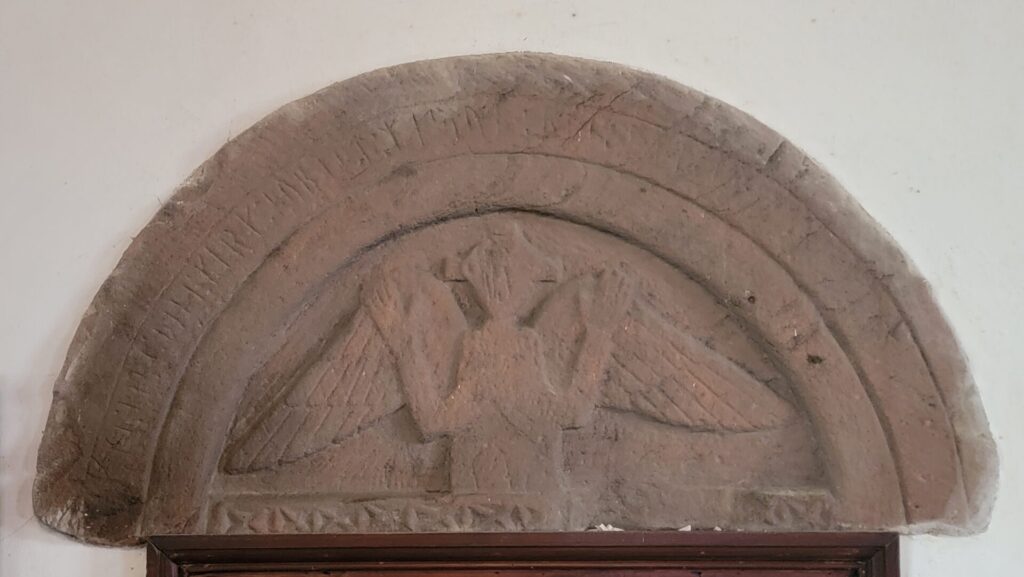
We were shown a very rare Norman tympanum, a half-moon stone arch carved with a figure and with runes around it explaining who had carved the stone. There is a translation in a frame at the side. Today it is cemented into the west wall, but it had obviously been above a door, was found in 1826 at Beckside farm built into a wall. Also found in 1826 built into the east end wall was a fertility stone, with the carved goddess Freya depicted. The font is Norman, made of sandstone, and during the church’s renovation a Mr Fell of Fell Mount removed the basin and placed it in his garden where it was used as a flower vase! It was returned finally in 1898.
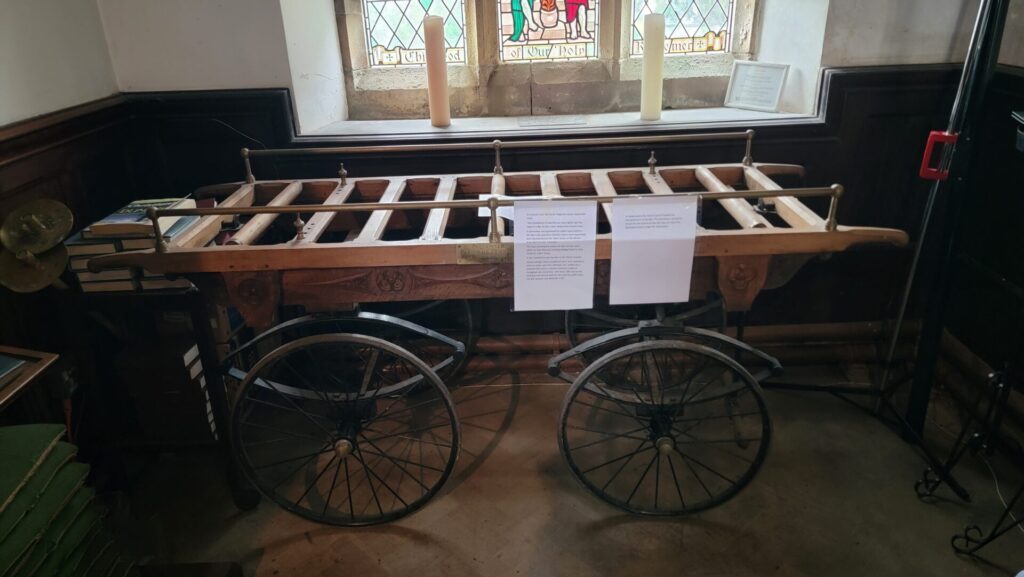
Also displayed by the south-east transept was a funeral bier, in excellent condition. This dates from 1918 when parishioners asked for a carriage to take the coffin from long distances instead of having to manually carry it.
The church also has folders of parish magazines dating back many years, which made interesting reading including the fundraising and ordering the funeral bier. It was amazing what stories a local village church had to tell.
Yvonne kindly provided refreshments for us and entertained us with many aspects of the church activities. And finally outside, William Fleming, a notable benefactor is buried here and there can be seen chevrons placed into the south wall.
It was a very enjoyable, and busy afternoon and is well worth a visit in the season, just to see snowdrops etc in the cemetery across the road.
With many thanks to Sue Lydon for organizing this interesting visit and writing up the report.
September Meeting
An Edwardian Gentleman's Private Steam Launch on Lake Windermere
A well-attended talk and presentation was given by Helen Steeple and Roger Calvert at the Croftlands Community Hall, Ulverston.
Helen began by out-ling the history of the S.L. (Steam Launch) Shamrock and Roger the technical details.
Shamrock was built by Nathanuel Shepherd of Shepherds of Bowness-on Windermere in 1906 the first owner being William Birtwhistle, a cotton mill tycoon who lived at Blackburn until 1929 and then under the ownership of the Ashley family of Windermere. She was handed over to the Bowness Bay Boating Company by Billy Ashley.
1948 saw her steam plant removed and a TVO (Tractor Vaporising Oil Engine) engine being installed and later this was replaced by a diesel engine. 1974 saw her laid up with an uncertain future and in a quickly deteriorating condition. Roger Mallison recognised the potential of Shamrock and purchased her in1976 restoring her over 3 years to the original condition with a steam plant utilising an old boiler from the Ravenglass and Eskdale Railway and building his own steam engine.
November 19th 2009 disaster struck when the level of Windermere rose by 10ft above normal level crushing Shamrock against the upper floor of Wray Castle Boathouse destroying the saloon clerestory deckhead, causing extensive damage to windows and doors.
Roger Mallison took up the task of repairing Shamrock and in June 2010 taking up her lake cruising again. Much of restoration costs was funded by donations from Friends of Shamrock. The future of Shamrock was ensured when Roger Mallison transferred ownership to The Shamrock Trust. In 2023 Roger Mallison was awarded the MBE. "For services to Steam Boating Heritage and the community in Cumbria" which he is very proud of.
The Shamrock Trust is dedicated to the preservation, operation, and display of the 46ft Historic Windermere Steam Saloon Launch Shamrock and is determined she remain operational on the lake for many years reminding all of the times the boats were integral to the Lakeland scene.
Shamrocks Hull is 45ft 11in overall length, 8ft beam, and draws about 4ft, is carvel built of teak planks on oak with timbers, straight stem, and cruiser stem. Aft there is a saloon with clerestory deckhead and in the stem an open saloon with green and white awning. A sink with hot water kettle and storage locker is in the saloon. Shamrock is varnished above the waterline with a white strip.
Her original boiler was built in 1927 by the Yorkshire Engine Co Ltd in Sheffield for the Ravensglass & Eskdale Railway locomotive River Irt and fitted by Roger Mallinson following modification and a side firebox, water being supplied from the lake. Two safety valves are fitted to blow at 120psi on the boiler with sight glass drains blown into the ashpan. Air to the boiler is controlled at the top of ashpan beside the boiler. The engine is a double acting twin high pressure type built by Roger Mallison in 2001 with Marshall valve gear working slide valves in one valve chest at the back of the cylinder block.
Cylinder bores of 4in and stroke 5in lubricated with wick feeds to main bearings and little ends, big ends from main bearings via bores in the crankshaft. Crosshead slides by a dipping wick system. Reversing gear is manually lubricated.
S L Shamrock was a sister of ‘Osprey’ and ‘Swallow’ built by Shepherds between the early 1900’s and 1911. These followed on from the magnificent similar vessel ‘Branksome’ built in 1896.
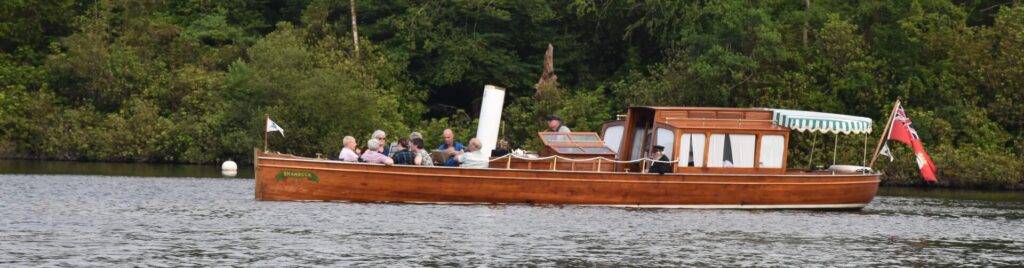
Shamrock is seen here during a Musical Evening on 25th June 2024 when an ensemble of Gilbert and Sullivan singers entertained a group of steam boats to the Western side of Belle Isle on Windermere.
A well laid out display of photographs, magazines, leaflets were to hand for attendees to review following the talk with handouts to takeaway. A vote of thanks was summed up by Geoff at the conclusion of the meeting.
Geoff Holme Local History Group
VISITING GARDENS
September visit to Hylands House in Kendal
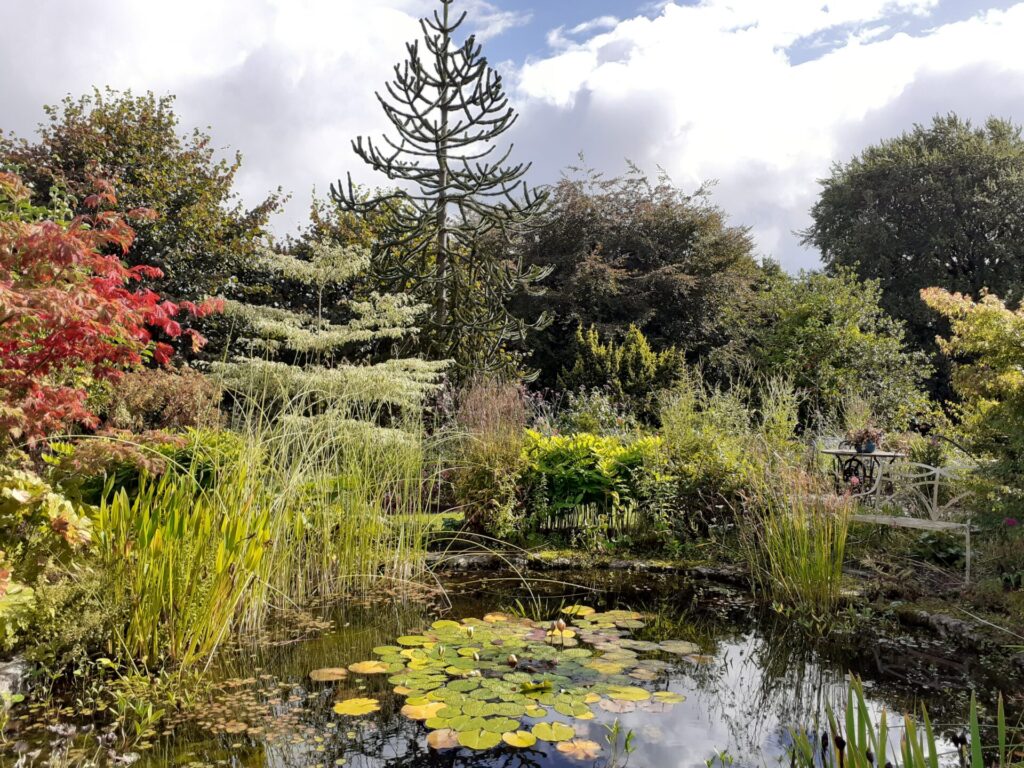
As the name implies, yes, it is on the top of a hill, an amazing arts and craft house and extensive grounds with a WOW factor.
An early autumn day, a risk of showers and our small group are clad in jackets, clutching umbrellas, a change from the long hot summer days and perhaps a welcome relief, greening up grass and rain for parched plants.
Having been empty for over two years, in 2020 an enterprising couple took on the massive project of renovating both the house and extensive grounds with help from their grown up family and volunteers. We were in awe at the amount of work that has been done, including removing over 100 overgrown leylandii, and planting over 1,000 trees and shrubs.
Emma met us and kindly gave us a complete tour. The remains of wisteria could be seen on the front of the south facing house. There was a formal garden area with a terrace around the house with a stunning view of the fells through a gap of shrubs and willow trees. This overlooked a pond with beautiful planting, previously a tennis court. Tables and garden seats in both shady and sunny spots made it seem very homely and welcoming, altogether a very peaceful environment. Scattered around the garden were some large and unusual sculptures, remnants from past Lantern Festivals. We continued to the greenhouses and vegetables, then bee hives and hens. En route we walked through the large garden shed housing a fascinating set of tools, both old and modern.
A second large area had been left as grass, planted with copses of trees and wilder areas, designed to encourage wildlife, a recurring theme in this garden.
Following our tour we were invited into the house for refreshments; treated with great hospitality to scones with jam and cream and a delicious fruit cake, coffee and tea; honey was for sale too. We also had some uninvited guests, the WASPS arrived; “It’s the season”, they said, as we tried not to jump up and run. We remained calm as we finished our scones quickly.
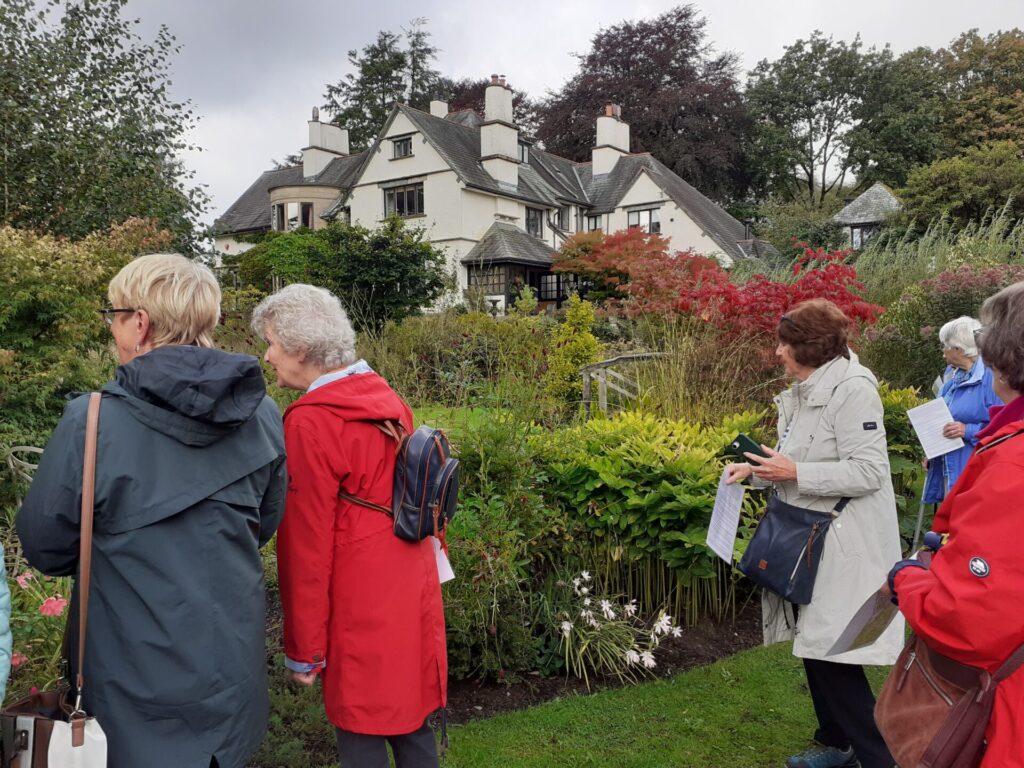
Next year Emma told us she would not be having as many visitors but will concentrate on the NNN (Nature, Natter, Nosh) which she runs to encourage visitors to engage in various wildlife projects. We very much enjoyed our visit to Hylands and some of us have signed up on the Wildlife What’s App group!
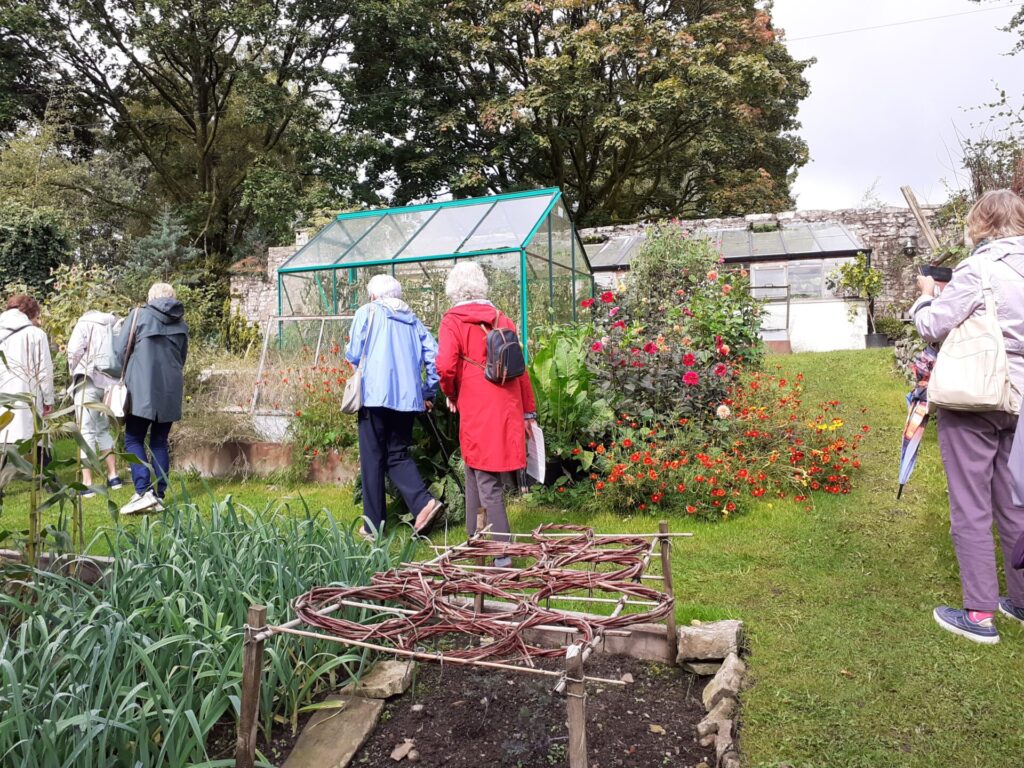
Thanks to Diane Hill for organising this trip. Report by Mave Clerey.
Our next visit on Tuesday 20th October is to Low Fell West in the Winster Valley. The 2 acre garden underwent a restoration in 2023 and includes shrubs and trees noted for autumn colour. Much of the garden has wheelchair access, although there are some steep slopes and rough paths. Dogs are permitted on a lead. The cost is £10, including drinks and cake, and £3 is payable to drivers. We will meet in Victoria Road, Ulverston for car sharing at 10.00. Mave Clerey is organising this trip.
To book your place please contact Jeni Sarson by Monday 12th October at the latest, stating whether you are a driver or will need a lift.
Jeni Sarson Visiting Gardens
INDUSTRIAL HISTORY GROUP
Visit to Threlkeld Quarry and Mining Museum on Thursday the 24th September 2026
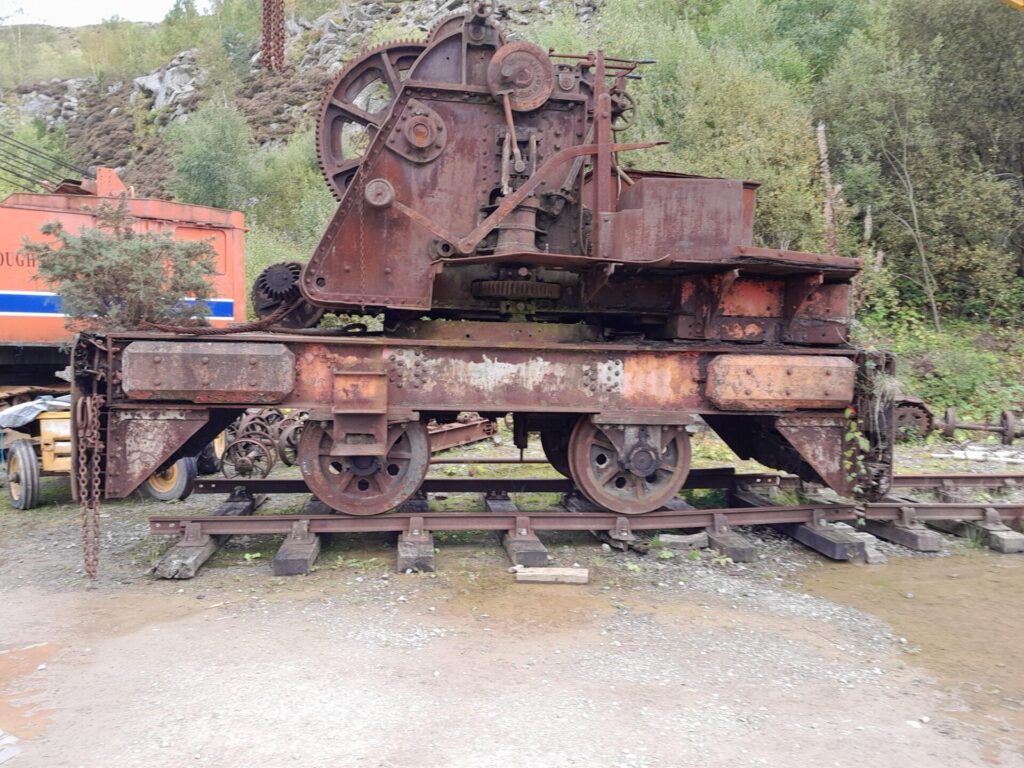
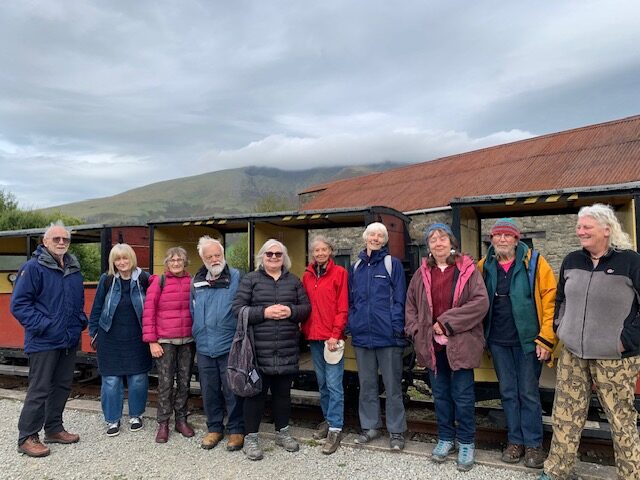
Some of the 15 members, of the group on this visit, drove directly to Threlkeld, but others car shared. The Threlkeld Quarry & Mining Museum is situated in beautiful countryside, 3 miles east of Keswick. The old quarry is home to a small geology and mining museum and a quarry site with a unique collection of old excavators, vehicles and machinery.
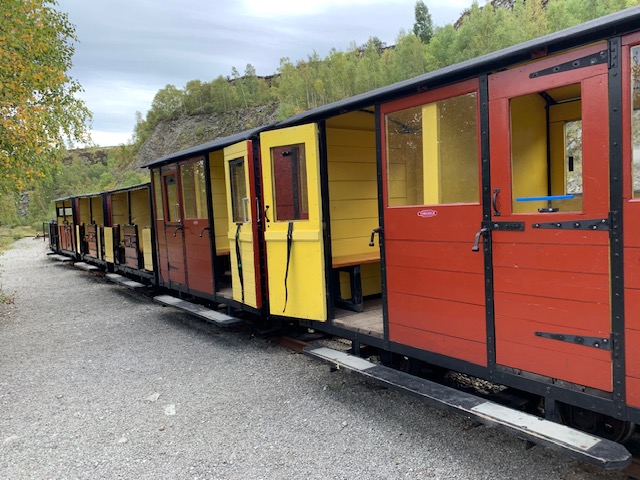
Almost everyone arrived in time to start the visit with a 30-minute ride to the quarry face on the 2ft gauge railway. Three of us were too late, but were able to go later.
Two museum volunteers gave us a talk on the history of the quarry, and answered our questions while the small diesel locomotive was being moved to the other end of the train. These gentlemen had helped to relay the track of the mineral railway, so that visitors can view the quarry faces in safety and relative comfort. Quarrying of microgranite ceased in 1981. Thirty years ago, the Vintage Excavator Trust started using the site as a home for their 80 or more vehicles and pieces of machinery. There are no shiny, newly painted machines here, but amazingly 60% of them are in working order.
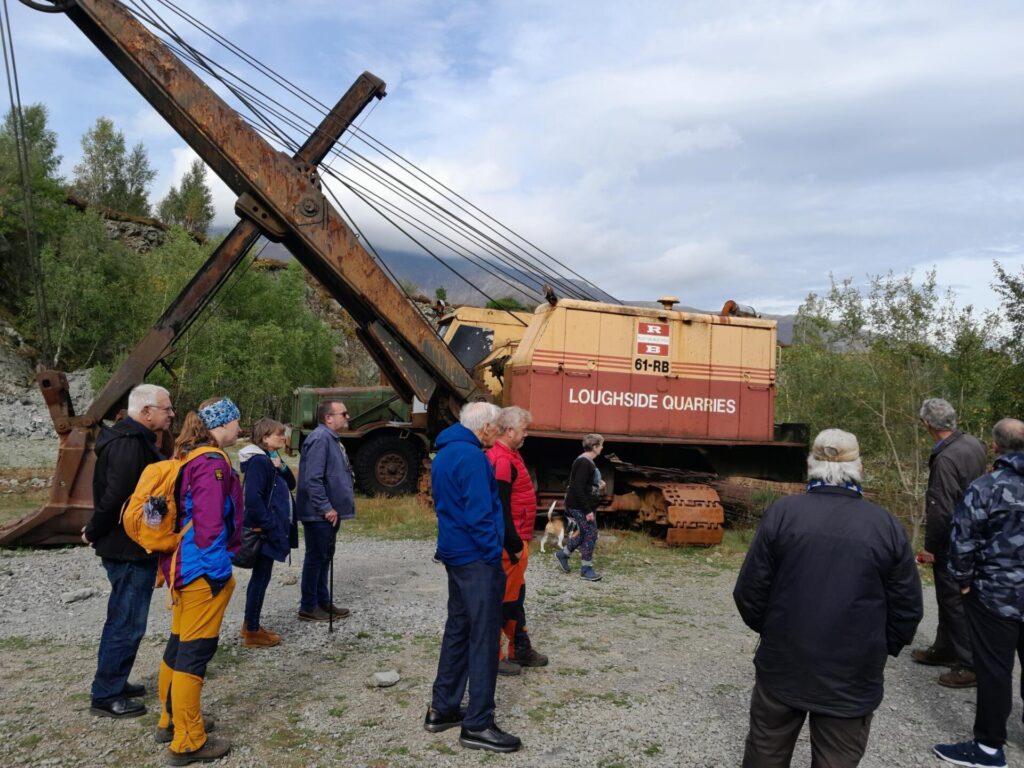
The museum building was our next stop. It is a fascinating place run by a team of 25 volunteers. Coffee and tea were available to buy for £1 a cup! One lady was doing a great job looking after the gift shop and making the drinks. Donald and Peter were our guides around the Quarry Room and the Mining Room. They were friendly and incredibly knowledgeable. We learned about the relationship between the geology of the Lake District area and the quarrying of local limestone, sandstone, granite and slate.
A large, keyed table map of the Lake District was surrounded by samples of rock from the different areas. One remarkable specimen showed the contact between Skiddaw Slate and microgranite. This would have occurred when the molten granite pushed up from under the more ancient slate. Photographs and samples from more than 50 old and more recent quarries were displayed around the sides of the room.
Our guide, Peter, had been responsible for setting up the Mining Room, and was able to tell all about lighting, drilling and explosives. His personal stories made it even more interesting.
After our packed lunches and more coffee, we followed the trail around the extensive Quarry Site. The oldest excavator, Number 306, was built in 1909 by Ruston Proctor in Lincoln. Its working life ended in 1931, and it then spent the next 50 years under water before being extracted and renovated in 1977. Number 306 is now the world’s oldest working excavator.
It was a good visit, although warmer weather would have made it better.
A big thank you to Jo for organising everything, to the car drivers who carried passengers and to the wonderful volunteers at the museum.
Future visits are:
October 22nd - Jean McSorley will be talking about “Mud, Mayhem and Moneymen – The Making of Barrow 1840-1890” at Gleaston Village Hall
November 26th - annual review and meal at Gleaston Village Hall
We will invite speakers to Gleaston Villag Hall in January, February and March
April 22nd - The British Commercial Vehicle Museum, Leyland
May 27th - Kath Walley is leading us in Kendal, including a visit to the Lord Mayor’s Chamber.
There is also a visit to Oxleys, waiting for confirmation of the date.
If you would like to join us on any of our visits please let Jo White know.
Barbara and I are already gathering ideas for next years programme, so if you could lead a visit or have an idea please let Jo know.
Jo White Industrial History Group
WORLD HISTORY GROUP
Korea - 1850 to the 1950’s
As most of us know little about the country and people, we explored some fascinating facts and figures to provide a background knowledge of its culture during this period, especially regarding the invasions, war and partition.
The Korean War has never been ended and the North and South are very different countries.
We heard of many unique characteristics such as an alphabet with 24 letters, 14 consonants and 10 vowels, reading left to right, but columns read right to left!
South Korea leads the world in robotics, internet capacity and speed, lowest obesity yet highest alcohol consumption per capita, cosmetic surgery, underfloor heating, world’s largest department store open to 4.00 a.m. It’s many superstitions include the fear of the number 4 and red ink.
North Korea has the world’s largest armed forces but worst human rights. Their elections are always 100% success for the hereditary dictatorship.
The DMZ is world’s most heavily guarded border but contains some of the world’s rarest (and safest!) animals, such as the Siberian tiger and Amur leopard.
In October we study the Japanese invasion, 1910 to 1945, so, come and join us by contacting Rosie
If you are interested in joining the group please contact Rosie Kyles or via World History Group on the Furness u3a website.
ENVIRONMENT MATTERS
To kick off our Autumn Term programme, the Environment Matters Group accepted an invitation to visit Swarthmoor Reading Room, to be shown how the team there had been working to futureproof the building. We were welcomed by the Chairman, John Sherwin who had prepared a wonderful presentation for us, telling of the history of the building and his recent drive regarding renovations and future plans.
Dating back to the 1880s, the building consisted of a reading room on the ground floor - a place where miners in the area could meet (with at one time two snooker tables no less!). The upper floor housed a church. In more recent times, this community building has been used by a variety of groups – including our own Uke Troupe, available for bookings for meetings, parties etc.
However, the time came for serious deliberation to be given to the necessary refurbishment of the building, and it was this recent history that John was eager to share with us, with particular focus on environmental and sustainable considerations.
To begin with, locals had been invited to respond to a questionnaire to determine their thoughts about the upgrading required and ensuring support for such a building in the area. Response was overwhelmingly positive and the development project got underway, briefly detailed below.
Phase 1 Commissioning a combined structural and greening survey
Phase 2 Emergency works – replacing slates, temporary flat roof and renewing meeting room window
Phase 3 Renew extension flat roof. Renew ground floor lighting. Provide extractor heat exchange fans, electrical safety checks. Replace old window on upper floor. Repair meeting room ceiling
Phase 4 Renewing roof and fit solar panels. Provide battery storage and back-up gateway
Phase 5 has now been reached. Renovation of upper floor. This will involve repairing the laths, plaster ceiling in the main hall, replacing wall heaters with more efficient heating system, plumbing and electrical work.
There is a Phase 6 too – but this is described as involving ‘non-urgent’ actions.
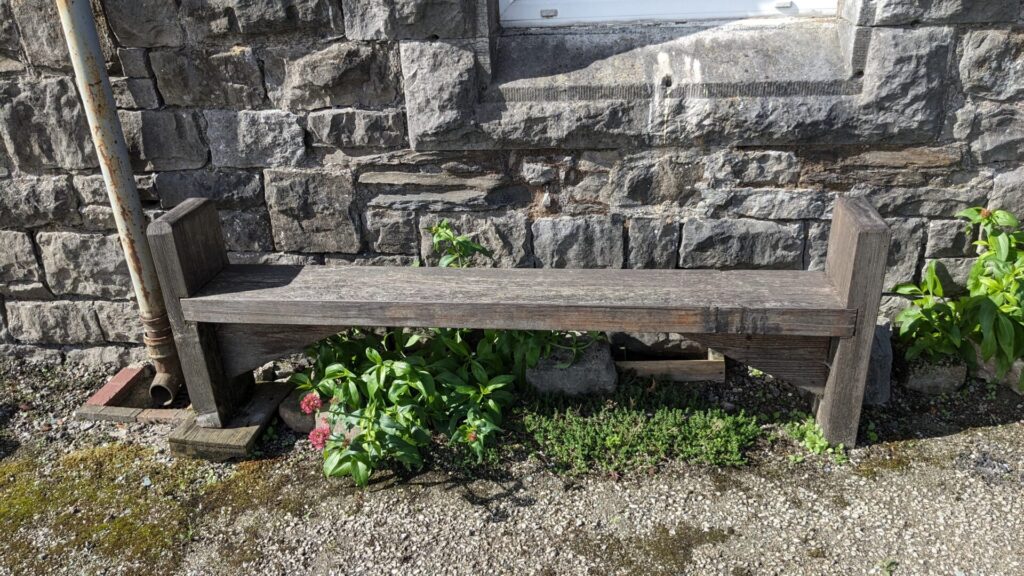
As we were shown around the building, John was keen to point out and explain how consideration was given to environmental and sustainable concerns throughout the process. Outside, lawn and flowerbeds are maintained (despite a past suggestion of change of use to a car park), compost bins have been installed, and a flower trough has been made from wood no longer required from the upper floor. A most memorable example of recycling is the result of a sad incident some time ago, when the wooden cross, a well-known feature of the area, fell from an outer wall. This has now been fashioned into a bench!
We were truly in awe of how the committee, led by John, have grasped the challenge of future proofing the building. And, of course, reading through the phased planning does not mention the enormous amount of time involved to action each stage – the paperwork, phone calls, investigations, acquiring charitable status, fundraising, getting quotes for building works …
A memorable visit, showing what can be done with vision, determination, and leadership.
QUESTERS
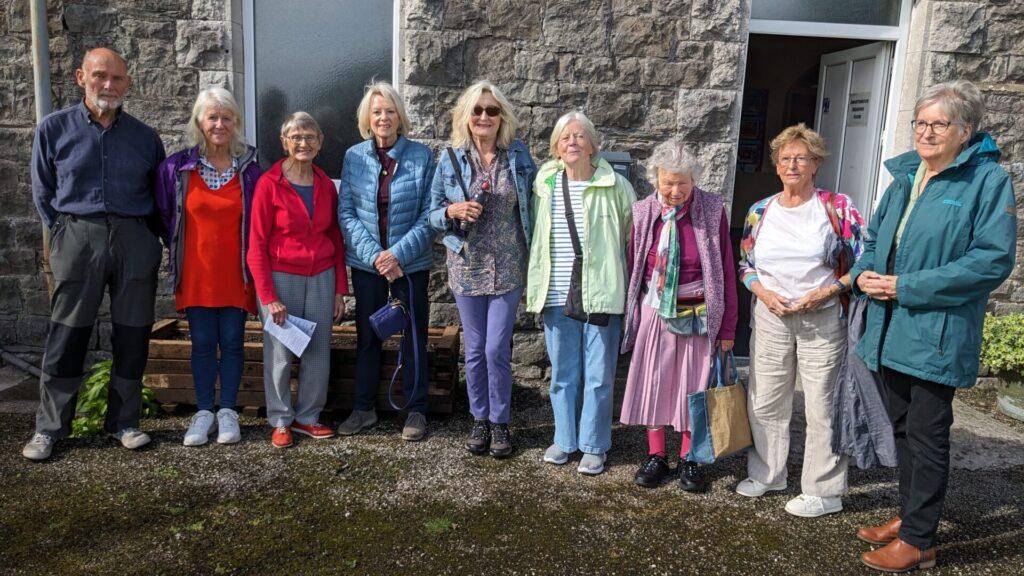
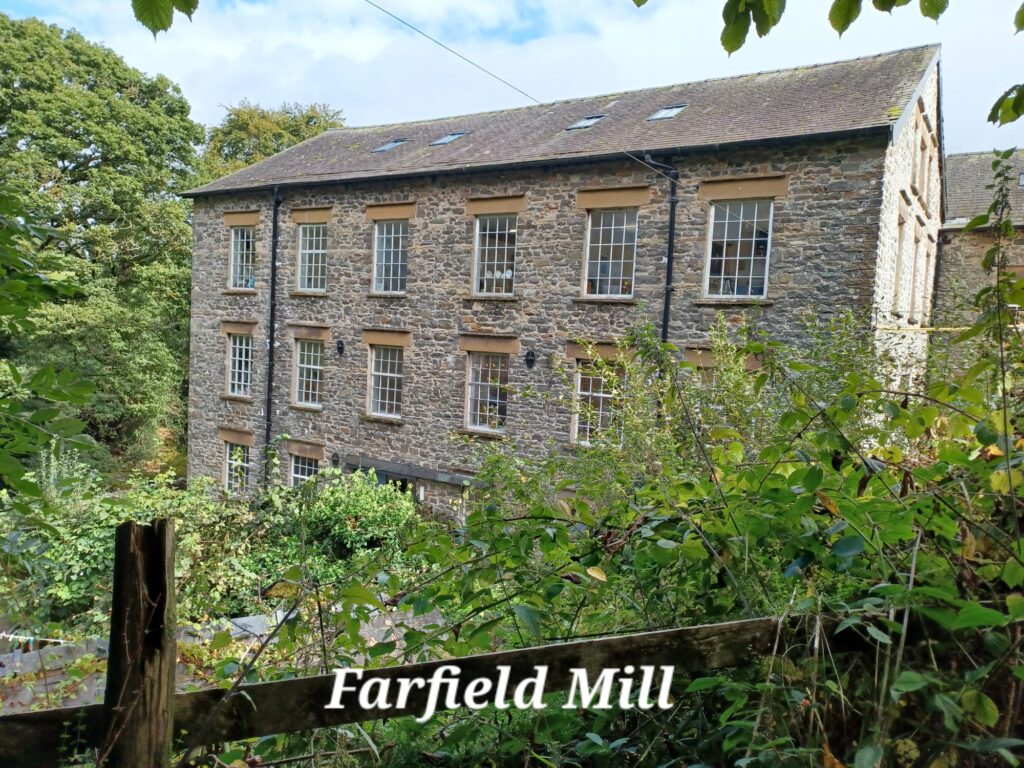
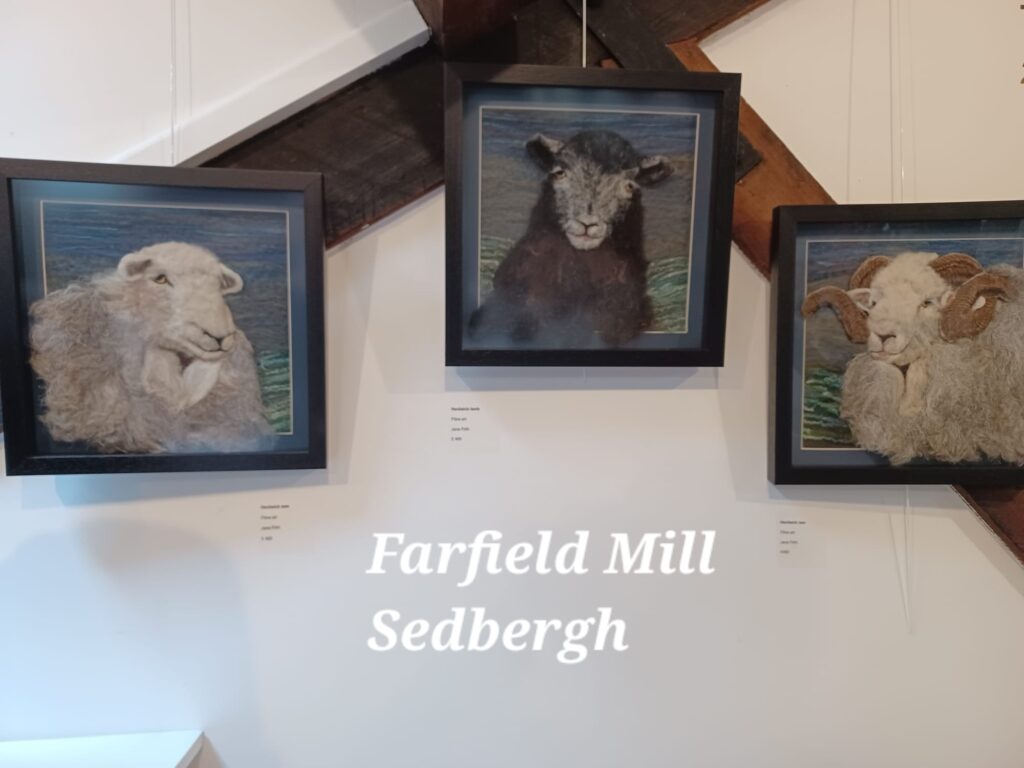
The Questers group visit in September was to Farfield Mill near Sedburgh and proved to be a fascinating trip. The mill was built in 1837 by the Dover family and remained in the family for the next 100 years. More recently it has been transformed into an arts and crafts venue whilst retaining a lot of the original mill equipment housed in the original building. We were lucky enough to enjoy various exhibitions including paintings of dilapidated buildings in the Yorkshire Dales, a Textile Fusion display using textiles in art to great effect and a display of quilting using the theme of pathways. All the artists are from the local area and many have small workshops within the mill. Many of us also enjoyed looking at the artefacts from the mill's working life including a rare Witney blanket loom. Our thanks go to Doreen Daniel for organising this event.
The photos were taken by Margaret Cain
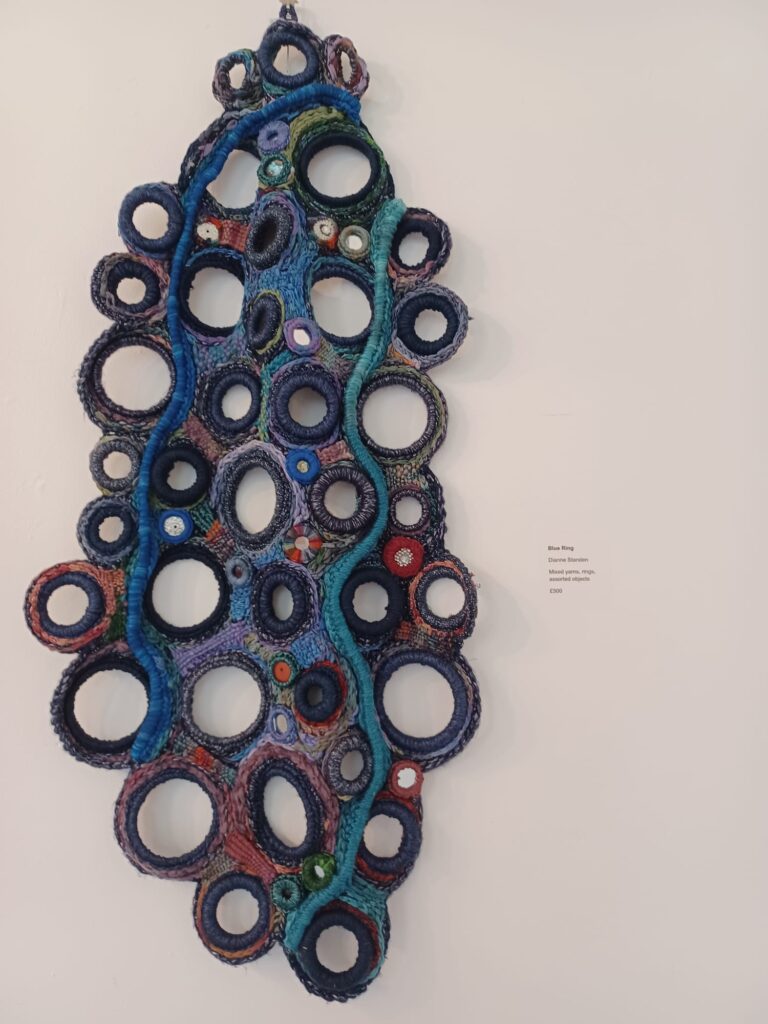
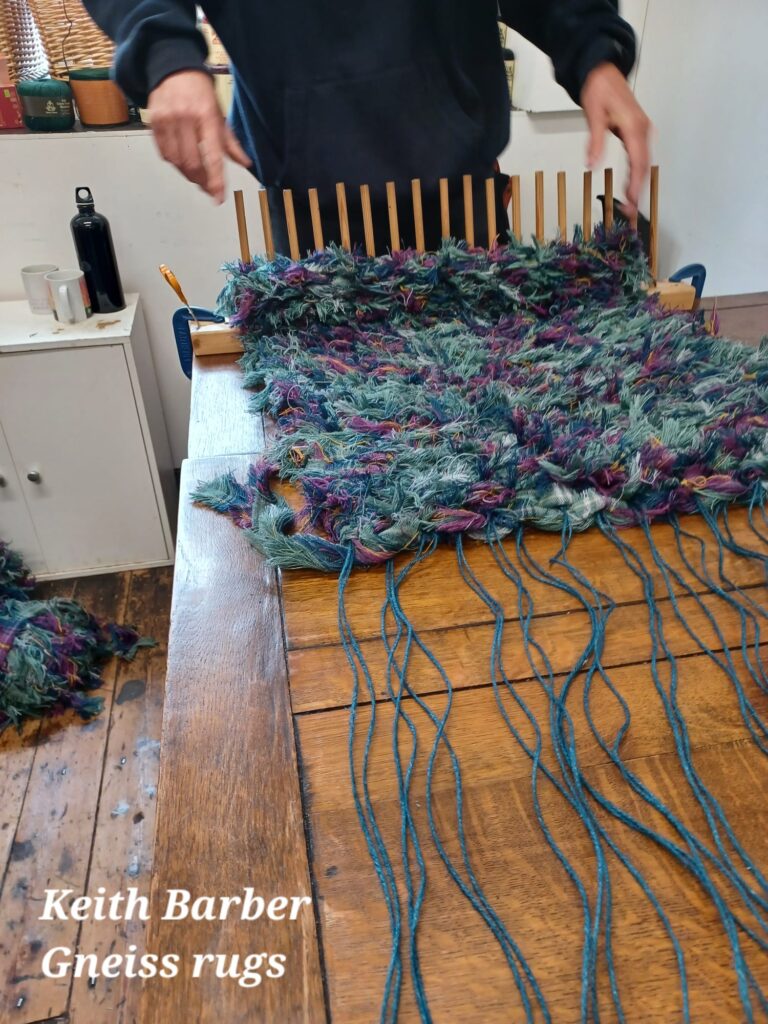
Looking forward our next visit in October, this will be to the Jetty Museum near Bowness. It has been organised by Netty Garforth, and Tim Evans is now running it in Netty's absence. We have a special group discount entry fee of £8.00 per head and this must be paid in advance either at the next general meeting, or in person to Tim or Sue. Please contact Tim Evans if you would like to go to this. Tim has arranged that we should congregate in the café in the museum at 10.30 and from 11.00 we will have access to the exhibition galleries and at 11.30 we can join in their conservation conversation - a time for discussion about the restoration and conservation work carried out by the museum in their workshops. It sounds a fascinating trip and if the weather plays ball there may even be heritage boat trips available at an additional cost of £12.00 per person.
Tim and Sue will be at the next general meeting to collect money and answer any questions.
Sue and Tim
Please see the Questers Group page for details, or contact Tim Evans
SEQUENCE DANCING
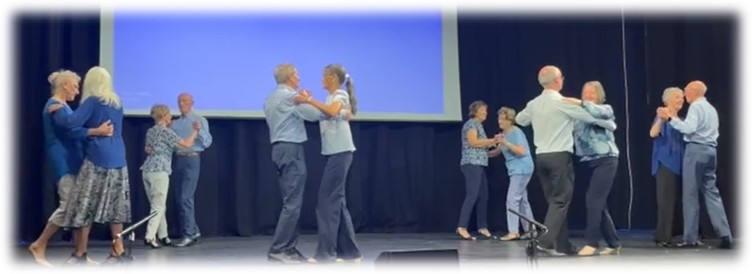
What an exciting day we had at the 20th anniversary celebrations. None of us expected to be performing on stage when we first started the group.
Pushing yourself outside of your comfort zone can be exhilarating and a great sense of accomplishment.
Understandably though, there were many who chose not to join us on stage, and that’s ok, it’s not for everyone.
We are super proud of all our dancers and the community of friends we have become.
If you fancy joining us, we are at Croftlands Community Centre on a Wednesday afternoon as follows:
14:30 to 15:30 – Beginners Session
Learning the basics and creating a foundation to build on
15:30 to 17:30 – Popular Sequence Social Dance
A fun social dance for improvers, returners and experienced dancers
We are happy for dancers to come to either or both sessions.
Dancing is great for overall wellbeing, by being physically active, getting the brain working learning the steps, and socially fab-u-lous.
Hope to see you on the dancefloor soon.
WELFARE AND INCLUSION UPDATE
Be Prepared
This month we have safety in mind and in particular being prepared if there is an incident or emergency during a u3a activity.
Can you all please ensure you have with you who to contact and let it be known where this information is, such as your wallet, purse, phone case etc. It would also be useful to have more than one contact, in case they do not answer their phone, and also who this person is to you, e.g. family, friend, neighbour. If there is also any particular medical condition that should be known, such as epilepsy, diabetes, heart condition, including any medication you take. This information could be vital should an incident occur and you are not able to communicate yourself.
Group Leaders, it is in your interest to ensure you and your group have this information with them, but it is primarily each individual’s responsibility to ensure their group leader (or a buddy within the group) know how to help you should the need arise.
Obviously, we always hope there are no incidents during our activities, but being prepared helps all of us to deal with a situation quickly. Your safety is our top priority. This may also be of interest to you. I saw a post on Facebook from the Ulverston News regarding preparing for an emergency. There were different aspects to it, from having a list of emergency contact numbers through to having a grab bag ready should you need to vacate your home quickly. It’s a good idea and stops the feeling of panic if you find yourself in an unexpected situation.
Here is a link to their website https://ulverston.com/prepare/
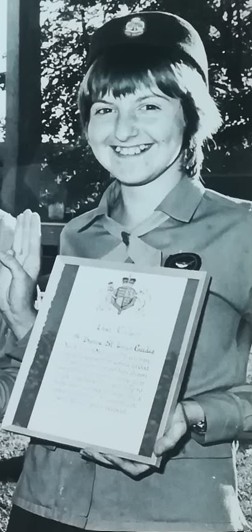
All this talk of being prepared reminds me of my Girl Guiding days and their moto of ‘Be Prepared’. Here’s a picture of me receiving my Queen’s Guide award in the 70’s
Welfare and Inclusion Officer
SOME OTHER SOURCES OF WIDER U3A NEWS
There are several places where you can catch up on U3A news from further afield.
There is a U3A Friends Group who send out a regular newsletter. You can see the September edition here, and if you would like to subscribe there is a link at the bottom of their newsletter.
There is a U3A YouTube channel U3A
The North West Region of the U3A have their own website, and a quarterly newsletter.
This is the August - September 2026 copy. The North West Region's Council Representatives also have a Newsletter read it here.
You can access the national Third Age Matters magazine on line here, including screen read editions.